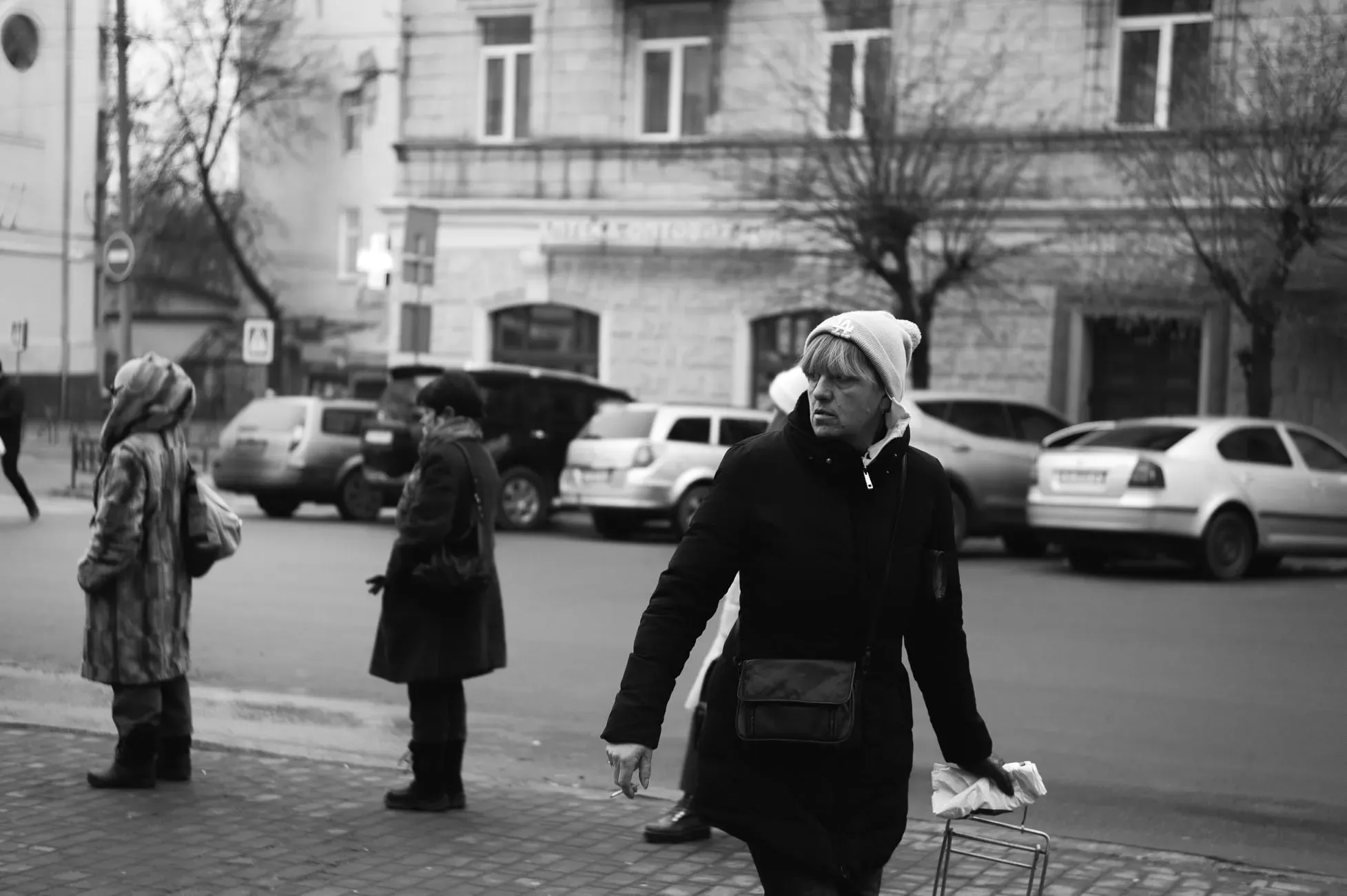
Street photography is like hunting without a weapon. You go out into the city, look for interesting scenes, capture people’s emotions, the play of light, and unexpected moments. It can be funny, unsettling, sometimes even risky.
Unlike landscape photography, the street has its own character, its own rules, and unpredictable reactions. People aren’t static objects. Some will smile, some will get angry, and some won’t even notice that they’ve been photographed.
Today, I want to talk about how street photographers handle all this—how to deal with people’s reactions, what legal aspects to keep in mind, and, most importantly, how to feel confident.
How Do People React to Being Photographed? Spoiler: differently
When you stand in a crowd with a camera, it almost always triggers some kind of response. The real question is—what kind?
80% of people don’t even notice they’re being photographed. They simply don’t care what you’re doing.
10% notice but don’t mind. Sometimes, they’ll fix their hair or try to look a bit more photogenic.
The last 10%—that’s where things get interesting.
A Friendly Encounter at a Café
I was shooting in Café one evening. The light was beautiful, long shadows stretching across the streets, the city coming alive. I saw a man sitting at a café, staring thoughtfully out the window. The composition was perfect. I took the shot—and then, suddenly, he turned, caught my eye, and… winked.
That moment made the photo even better.
This is an example of a positive reaction—people don’t always mind, and some even play along.
A Less Pleasant Experience
In London, I was photographing a woman in a bright red coat. She stood out perfectly against the urban backdrop. I took the shot, but a second later, she noticed my camera, stormed up to me, and started yelling:
“What the hell are you doing? Delete that right now!”
I calmly explained that I was simply capturing the city’s atmosphere, nothing personal. She kept shouting, and to avoid a bigger scene, I deleted the photo.
Should you always delete photos? If there’s no legal issue, you don’t have to. But if the situation escalates, sometimes it’s just easier to let it go.
How to Minimize Negative Reactions?
Don’t hide your camera. The more open you are, the less suspicious you seem.
If someone looks at you questioningly, just smile or give a thumbs-up.
If someone seems uncomfortable, nod and walk away.
If someone asks what you’re doing, be honest: “I love street photography, and the light here is amazing.
Most of the time, that’s enough.
The Legal Side: Can You Photograph People on the Street?
It depends on the country.
In most places, yes, you can photograph people in public spaces. But there are nuances.
Quick Summary by Country
USA, UK, Germany, Japan, Russia, Ukraine: You can photograph people in
public places without permission, but you can’t use the images for
commercial purposes (like advertising) without consent.
France, Switzerland: Stricter privacy laws—people can demand that you delete their photo, even if it was taken in a public place.
UAE, Saudi Arabia: Photographing people without permission is strictly prohibited.
What About Children?
This is a sensitive topic. Even if the law doesn’t forbid photographing children, their parents might not be happy. It’s best to avoid such shots unless you have permission.
Avoid photographing people in embarrassing situations (arguments, drunkenness, tears).
If someone clearly objects, consider deleting the photo.
If you plan to publish or sell your photo, get a signed release for.
The Ethics of Street Photography: Just Because You Can, Doesn’t Mean You Should
Laws are one thing, but ethics is another. Some things may be legally allowed, but should you do them?
Example: Photographing a Homeless Person
I once saw a photographer take a close-up of a homeless man sleeping on the street. The photo was striking, but… was it ethical?
If the image serves a social cause, maybe. If it’s just for “atmosphere,” probably not.
A Case with a Stranger in the Subway
A photographer once captured a stunning portrait of a woman in the subway. The light, the emotion—it was perfect. He showed her the photo, and she said:
“Please don’t post it, I feel uncomfortable.”
Legally, he could have posted it. But human decency won. He respected her wish and kept the photo private.
Basic Ethical Guidelines
Don’t humiliate people in your photos.
If someone asks you not to share their image, respect their request.
Don’t chase sensationalism at the expense of others’ dignity.
Many beginners feel anxious. The fear of negative reactions stops them from shooting freely.
Tips to Build Confidence
Start in places where photography is expected. Tourist areas, markets, events—people are used to cameras there.
Use a small camera or smartphone. They attract less attention.
Shoot wide and crop later. This way, you can hold the camera at waist level and capture natural moments.
Move quickly. Take the shot and walk away.
Find your style. Some shoot openly, others discreetly. Try both and see what works for you.
Final Thoughts
Street photography isn’t just about capturing people on the street. It’s about exploring life, finding compelling moments, and documenting emotions.
But there are challenges:
People react differently.
Legal rules vary by country.
Ethics matter more than the law.
The most important thing is to respect others while staying confident in your craft. If you shoot with curiosity, sincerity, and respect, you’ll capture incredible images.
Пока его современники пытались перекричать шум Нью-Йорка, фиксируя его ярость и хаос, Лейтер внимательно изучал, как капля дождя преломляет свет на стекле витрины, находя в этом больше истины, чем в громких социальных манифестах.



Comments